


Why Foshan Is a Global Hub for Custom Furniture
Foshan did not become a global furniture centre by accident. It grew because the right ingredients sit close together: skilled factories, material suppliers, hardware makers, finish specialists, logistics support and a long tradition of making real products at scale.
For international buyers, designers, hotel developers and furniture brands, that concentration changes what is possible. A project no longer has to fit the limits of one factory. It can be split across the right specialists, then brought back together as one coherent collection.
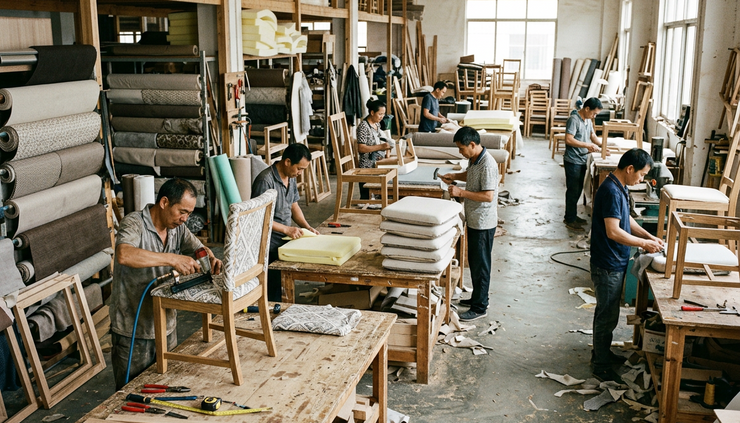
Foshan combines many furniture specialisms in one region
The strength of Foshan is not only the number of factories. It is the range of specialist production within a compact manufacturing ecosystem.
A single residential, hospitality or commercial project might need:
Upholstered sofas and armchairs
Solid timber dining tables
Veneered cabinetry
Marble or sintered stone tops
Metal frames and trims
Decorative lighting
Outdoor loungers and woven furniture
Beds, wardrobes and fitted joinery
In many manufacturing regions, these categories sit far apart. In Foshan and the wider Pearl River Delta, they are often close enough for sampling, inspection and coordination to happen with far less friction.
That matters because custom furniture rarely follows a simple catalogue order. A hotel lobby may need curved sofas, stone coffee tables, timber wall panels and matching loose furniture. A villa project may need wardrobes, kitchen cabinetry, outdoor seating and bespoke beds. Each item has different materials, tolerances and production risks.
A strong upholstery factory may not be the best place to make high-end timber cabinetry. A good stone supplier will not normally produce woven outdoor chairs. Foshan works well because the project can go to the right maker for each category.
The real value is choice, not just cost
Many people still think of Chinese furniture production mainly in terms of price. Cost matters, of course, but Foshan’s larger advantage is choice.
The region offers access to a broad mix of price points, finishes, materials and production methods. That range allows a project team to make smarter decisions. They can choose where to spend more and where to simplify.
For example, a boutique hotel might invest in high-quality upholstery and statement lighting, while using more cost-effective materials for back-of-house storage. A private residence might choose premium stone for key pieces, then use engineered timber finishes for secondary rooms.
This is where customisation becomes practical. Buyers can adjust dimensions, fabrics, finishes, hardware, stitching, foam density, leg profiles and packaging requirements. They can create products that suit a design scheme rather than forcing the scheme to suit the factory’s standard range.
The point is not to make everything complicated. Good custom production often means choosing the smallest changes that make the product fit the project.

Scale makes complex projects easier to build
Custom furniture becomes harder when a project includes many rooms, product types or finish schedules. Scale brings pressure. A small error repeated across dozens of pieces can turn into a major problem.
Foshan’s manufacturing base helps because many factories are used to repeat production, export packaging and multi-item orders. They can produce one-off samples, then scale approved designs across larger quantities.
That is useful for:
Hotels and serviced apartments
Restaurants and cafés
Villas and private residences
Retail interiors
Developer show homes
Furniture brands expanding a collection
Scale also supports material sourcing. If a project needs matching veneer, consistent fabric dye lots or repeated metal finishes, the production team must think ahead. The right suppliers need to be chosen early, and the specification must be clear before bulk production starts.
This is where Foshan’s network effect becomes clear. Material suppliers, accessory makers and finish workshops can respond quickly because they already serve a large furniture industry. The ecosystem has depth.
Still, scale does not remove risk. It simply gives a well-run project more tools to manage it.
The main challenge is coordination
More choice creates more decisions. More specialists create more handovers. That is where international projects can become difficult.
A buyer may find an excellent upholstery factory, a strong cabinet maker and a good lighting supplier, but that does not mean the final project will feel unified. Each factory may interpret drawings differently. Each may have its own standards for finishes, tolerances, packaging and delivery timing.
The common problems are familiar:
Samples look good, but bulk production varies
Finishes do not match across product categories
Drawings leave too much room for interpretation
Factories quote on different assumptions
Packaging is not suitable for export or site handling
Delivery schedules do not align
Quality checks happen too late
This is the hidden complexity behind Why Foshan Is a Global Hub for Custom Furniture. The hub gives access to extraordinary capability, but capability needs direction.
A project with five or ten suppliers needs one clear specification system. It needs drawings, finish references, approved samples, quality checks and production follow-up. Without that, the buyer becomes the coordinator by default.

A design-led production partner connects the system
A design-led production partner adds value because they do more than find factories. They understand how the final space should look, feel and function, then match each product to the right manufacturer.
That role often includes:
Translating design intent into practical production details
Choosing suitable factories by category, not by convenience
Checking samples against drawings and material references
Coordinating finishes across furniture types
Managing production timelines
Inspecting goods before shipment
Planning packaging for export and installation
This matters most when furniture is part of a wider design concept. A sofa, dining chair, wardrobe and bedside table may come from different workshops, but they still need to belong to the same project.
A design-led partner can also push back when needed. Some details look good on a drawing but create problems in production. A thin stone edge may be fragile. A timber profile may move over time. A fabric may not suit heavy-use hospitality seating. Good coordination catches these issues before they become expensive.
The best results come from treating Foshan not as one giant factory, but as a network of specialists. The skill lies in knowing who should make what.
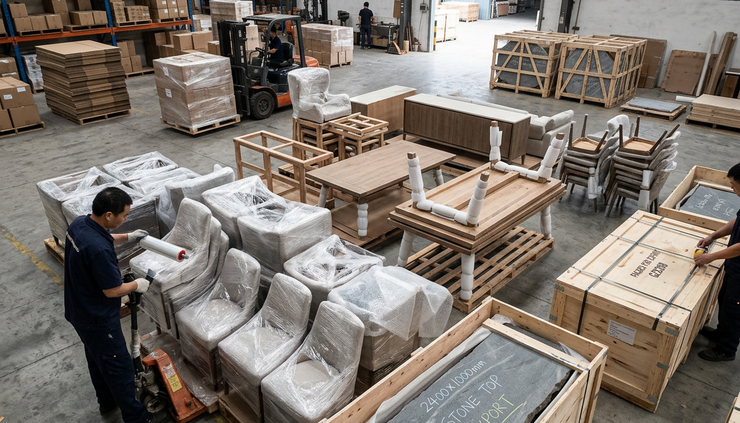
What Foshan offers to international furniture projects
Foshan’s rise comes from a practical mix of craft, capacity and supply chain depth. It offers the ability to build across categories, materials and quantities without relying on a single generalist factory.
That is why the region has become so important for custom furniture. It gives international projects access to a wider set of makers, more material options and the flexibility to adapt products to a specific brief.
The opportunity is clear: better choice, tailored production and the ability to scale. The risk is also clear: too many moving parts without proper control.
Foshan works best when specialist manufacturing is paired with strong design direction and disciplined project coordination. With the right partner, its network of factories becomes more than a sourcing destination. It becomes a complete production system for custom furniture.


Comments