


What Are You Really Paying For in Custom Furniture vs Retail Furniture
A sofa can fit through the door, sit against the right wall and still feel wrong in the room. The arms may be too bulky. The seat may be too shallow. The fabric may fight the flooring. Retail furniture often gets close, but close is not the same as considered.
The real difference between custom furniture and retail furniture is not only price. It is where the money goes, who the piece is designed for and how much control exists before anything is made.
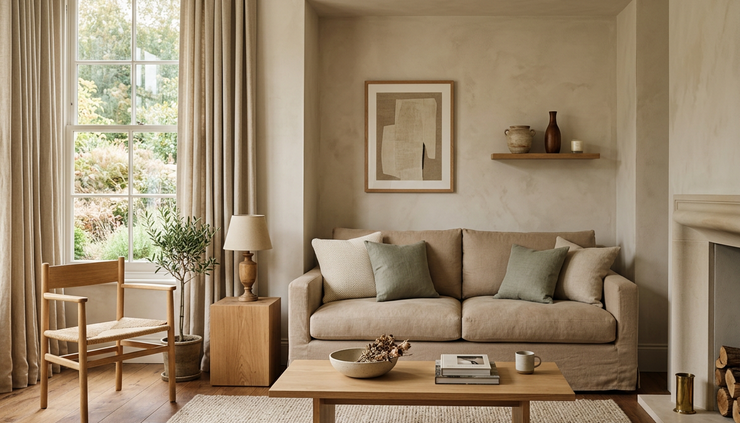
Retail furniture is designed for the broadest possible fit
Retail furniture has a difficult job. It must appeal to many people, suit many homes and work across a wide range of budgets. That means the design has to be general.
A retail sofa, table or bed is usually created around standard dimensions. The manufacturer chooses a width, depth, height, fabric range and finish palette that can sell at scale. The piece must photograph well, ship efficiently and sit within a clear price bracket.
This can be useful. Retail furniture is often faster to buy, easier to compare and simpler to replace. For many rooms, it does the job well.
The trade-off is compromise. A piece may be slightly too large for the wall, slightly too low for the dining chairs or slightly too generic for the wider scheme. None of these issues may be dramatic on their own, but together they affect how a space feels and works.
With retail, the question is often: Which available option is closest to what the room needs?
With custom furniture, the question changes.
Custom furniture starts with one specific space
Custom furniture is developed around a defined project. The starting point is not a product catalogue. It is the room, the layout, the intended use and the design language.
Take a sofa as an example. A standard sofa may be nearly right for a living room, but a custom sofa can respond to details that retail rarely covers:
The exact wall length or floor plan
The preferred seat depth and back height
The way people will sit, lounge or entertain
The required fabric performance
The proportions of nearby tables, rugs and lighting
The architectural style of the room
This matters because furniture is not experienced in isolation. A chair that looks elegant online can feel too upright at home. A dining table that seats the right number of people can still block circulation. A bed frame can be beautiful but leave too little room for bedside storage.
Custom design connects the piece to the actual space. Dimensions, materials, finishes and functionality can be adjusted before production begins. The result is furniture that feels planned rather than placed.

The budget pays for different things
Retail furniture and custom furniture can both be expensive, but the cost is built in different ways.
A retail price includes more than the physical item. It may reflect branding, showroom space, marketing, warehousing, distribution, seasonal stock changes and retailer margins. None of that is wrong. These costs are part of making ready-to-buy furniture available at scale.
Custom production changes the budget relationship. More of the spend can go toward the actual product, including materials, construction, skilled labour, development time and finishing. The process may include drawings, samples, revisions and coordination with the wider interior scheme.
That difference affects value. A retail piece may carry the value of convenience and brand recognition. A custom piece may carry the value of precision and fit.
For larger projects, sourcing can also be more direct. A route involving china, manufacturer, custom design, furniture, production, europe can allow a project team to control specifications while still managing quality, materials and delivery expectations. The key is not simply where something is made. It is how clearly it is specified and how carefully production is managed.
The money is not just buying an object. It is buying decisions made before the object exists.
Choice is practical, not just aesthetic
Custom furniture is often associated with unusual shapes or high-end finishes. Those can be part of it, but the more useful benefit is practical control.
A banquette can be built to suit a narrow kitchen. A wardrobe can work around sloped ceilings. A headboard can include reading lights, sockets or storage. A media unit can hide cables without becoming bulky. A dining table can be scaled to the exact chair size and room clearance.
Retail pieces ask the room to adapt. Custom pieces adapt to the room.
That control also helps with visual consistency. When finishes are developed together, furniture can align with flooring, joinery, stone, metalwork and soft furnishings. The space feels less like a collection of separate purchases and more like a complete interior.
This does not mean every item should be custom. A simple side table, loose chair or decorative piece may work perfectly from retail. The strongest interiors often mix both. The point is to know where custom adds real value.

Time and flexibility change the buying experience
Retail furniture is usually quicker. If the item is in stock, the route from selection to delivery can be straightforward. That speed is one of retail’s biggest strengths.
Custom furniture takes longer because decisions happen before production. Measurements must be checked. Materials must be chosen. Drawings may need approval. Samples may be reviewed. Lead times can vary depending on complexity, workshop capacity and shipping.
That extra time is not wasted if the piece is central to the room. A custom sofa, wardrobe, bed, dining table or built-in unit can shape the way a space functions every day. In those cases, rushing into an almost-right purchase can lead to frustration later.
The best candidates for custom furniture are often pieces that meet one or more of these conditions:
The room has unusual dimensions
Comfort requirements are specific
The item will be used daily
Storage or function must be exact
The design needs to match a wider scheme
Retail options keep creating compromises
Retail works best when the available product genuinely suits the space, not just when it is faster.
The real comparison is control versus convenience
Custom furniture and retail furniture are not enemies. They answer different needs.
Retail offers speed, visibility and simplicity. You can see the product, understand the price and make a decision quickly. For many rooms and many items, that is enough.
Custom offers control. It allows the furniture to be developed around dimensions, materials, comfort, proportions and use. It can solve awkward layouts, support a stronger design concept and direct more of the budget into the made object itself.

The question is not whether custom furniture is always better than retail. The better question is where precision matters.
If a piece simply needs to fill a spot, retail may be the sensible choice. If it needs to define how the room works, support a specific design and fit without compromise, custom furniture can offer a different kind of value. You are paying for the thought, the fit, the materials and the making, all shaped around one space instead of many.


Comments